The educational communities of Malleco and Cautín schools managed to acquire new skills and competencies, thanks to the Education + Connectivity program and the various actions implemented in digitalization, connectivity and environmental education.
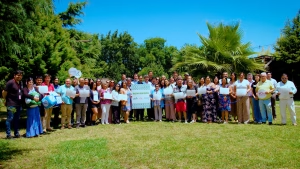
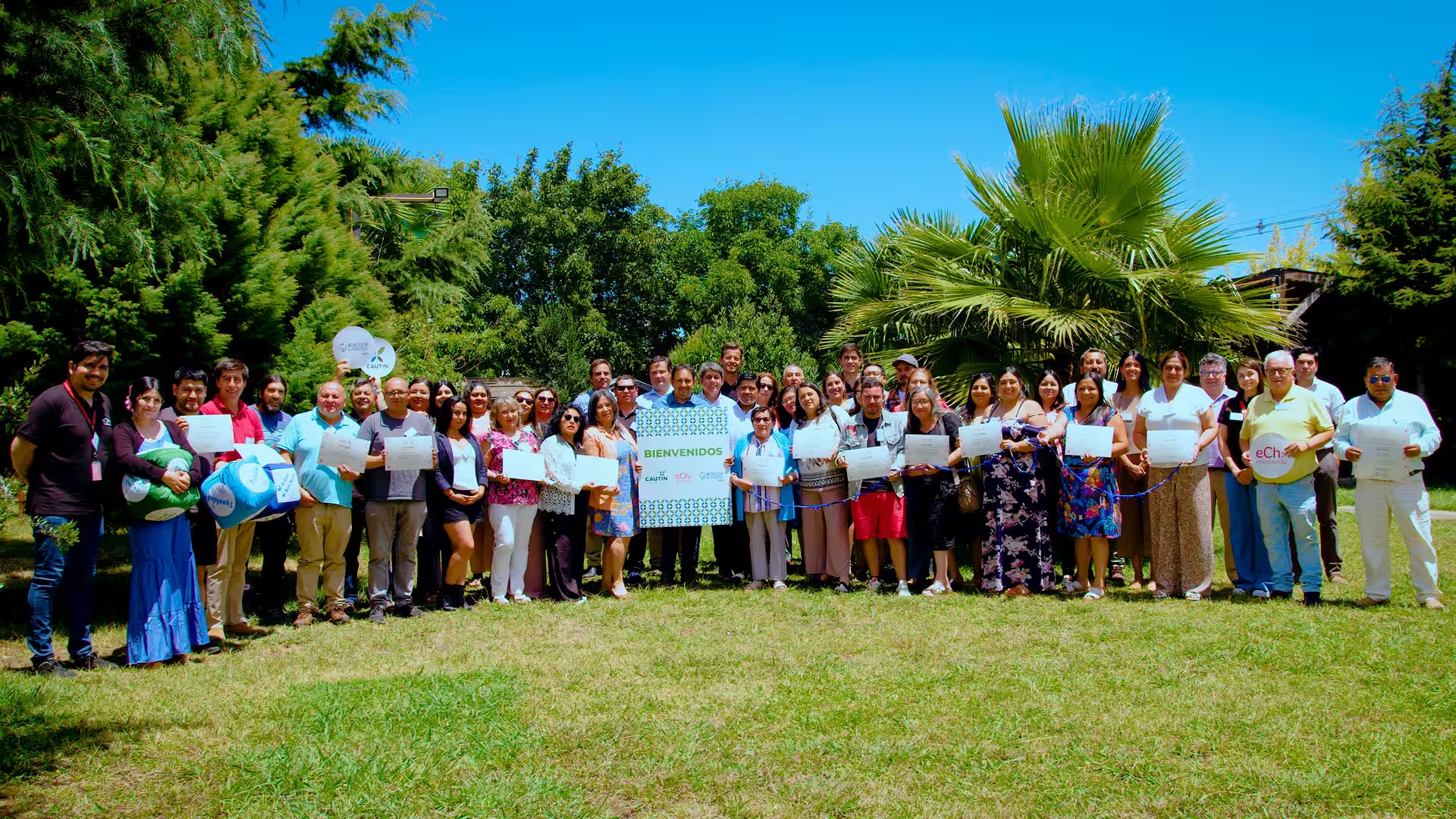
In the municipality of Angol and with a high attendance of teachers and principals of municipal education, the meeting of educational communities that are part of the “Education + Connectivity” program promoted by Cautín together with Enseña Chile Foundation and Kyklos was held, an initiative that began in 2022 at the G – 171 Chanco school, in the municipality of Lumaco, and which today has the participation of 24 rural schools in the region of La Araucanía.
“The project arises from a very specific need identified by our team on the ground: provide additional support for teachers in rural contexts, who often have to play a role in complex scenarios and with significant gaps in access and connectivity. Faced with this reality, in 2022 we decided to put into action. The project grew gradually and today, with great pride, we can say that 24 rural educational schools are an active part of this program. This is not just a number, it is a sign of trust and joint work,” Hans Steuer said, general manager of Bosques Cautín.

During the meeting, the schoolteachers, who have managed to obtain new skills and capacities linked to digitalization, connectivity and environmental education thanks to the program, were recognized for their commitment and participation.
Fredy Medina, Chacaico school principal, explained that this initiative has made it possible to shorten the gap with urban schools. “In our school we have satellite internet and technological equipment such as laptops and constant training to be able to deliver a quality education that is in accordance with the technological advances and new methodologies that are necessary today,” he said.
For her part, Teresa Loaiza, a teacher at the G-27 Colonia Manuel Rodríguez school, said that “this year we held competitions among grades, this helps the children to have much more fun with outdoor activities, and using computers for them is a novelty, so I am super satisfied.”
Edith Erices, G-50 Elena Muller school principal, explained that thanks to the program they have managed to have connectivity in a very isolated area, benefiting not only the students, but the entire community. “Thanks to this program we managed to have internet that facilitates planning, look for research work for children, they now have access to online resources and in addition, we work with the community that come to us to help them do online errands in the Civil Registry or when children have to apply for the school admission system.”
Marcelo Neculmán, executive director of Cautín, emphasized that “as Cautín and since our beginnings 34 years ago, we permanently support instances that contribute to the development of people and the environment, especially those aimed at strengthening territories. The program has been a success and that is largely thanks to the teachers, DAEM (district school administration), principals and in general to the entire educational community for the commitment, resilience and allowing not only to contribute to their schools and territories, but also to learn from them, who do a job of great value and with a lot of vocation.”